
Streamline risk analysis. Optimize design.
MADE empowers engineers to rapidly regenerate Failure Mode and Effects Analyses in sync with each design iteration. By leveraging a model-based approach, MADE keeps failure data consistent, current and fully traceable across the system lifecycle.
One-Click FMEA
Generate FMEAs directly from the system model.
Design Iteration
Regenerate analysis as the design evolves.
Failure Propagation
Simulate local, next and end effects.
Connected RAMS
Feed FTA, RCM, PHM and sensor strategy development.
Traditional FMEA struggles to keep pace with complex system design.
Systems-driven design and increasing equipment complexity make traditional manual FMEA difficult to conduct, validate and maintain. MADE changes the process by deriving FMEA outputs directly from a structured system model and its failure propagation logic.
Objective FMEA. Generated from engineering context.
MADE uses model-based automation, standardised engineering taxonomies, graphical tools and simulations to improve consistency, reduce rework and help teams identify latent design risks earlier.
From system model to risk-informed decision making.
MADE auto-generates FMEAs from system models, capturing functional behaviour and failure dependencies in a Digital Risk Twin. Outputs can then support Fault Tree Analysis, RCM, PHM and sensor strategy development.
Define the system
Use Functional Block Diagrams to model items, functions and interfaces.
Simulate failure effects
Inject failure modes and simulate propagation through the system.
Generate FMEA outputs
Create consistent FMEA reports aligned with selected standards and design iterations.
Accelerate Safety Analysis with MADE’s Model-Based FMEA.
Establish Casual System Baseline
Simulating Failure & Generating System Response
See MADE in action
See how model-based FMEA connects your engineering decisions.
Explore your workflow with the PHM Technology team.
Key MADE FMEA capabilities
MADE combines model-based analysis, simulation and lifecycle traceability to help engineering teams improve FMEA quality and reduce manual rework.
Digitally integrated, continuously evolving
Auto-generate FMEAs from system models, capturing functional behaviour and failure dependencies within the Digital Risk Twin.
Built for complex systems
Handle multidisciplinary systems with automated dependency mapping and failure propagation analysis.
Traceability and reuse across the lifecycle
Link FMEA data directly to fault trees, diagnostics and maintainability models within one unified platform.
Accelerated risk-informed decisions
Use real-time updates, version control and visual propagation tools to improve insight into failure risk.
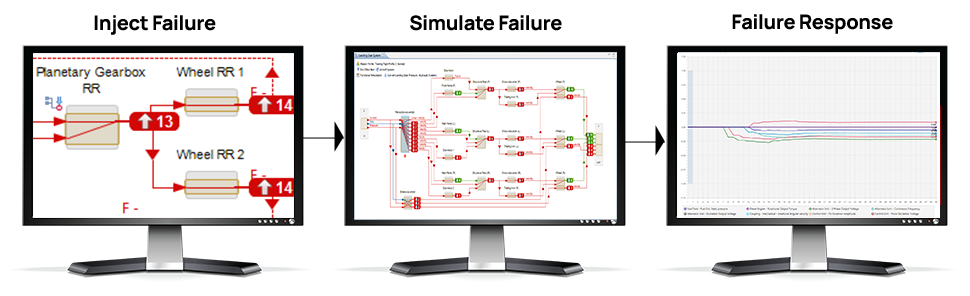
Define the system model that drives the FMEA.
Items. Functions. Interfaces. Failure context.
MADE Functional Block Diagrams show the system model, including logical or physical items, functions and interfaces. This structured model becomes the foundation for failure propagation and FMEA generation.
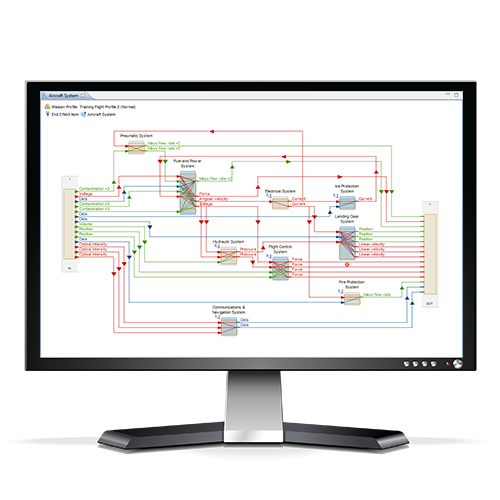
Simulate the effects of failure throughout the system.
Understand local, next and end effects.
MADE Failure Effect Simulations show the progression of failures through the system model, helping engineers understand how a local failure may propagate into broader system consequences.
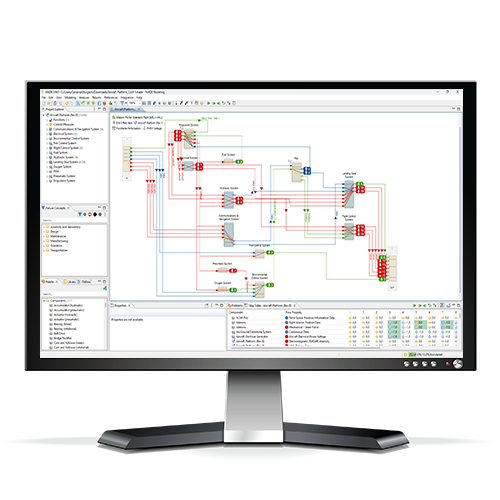
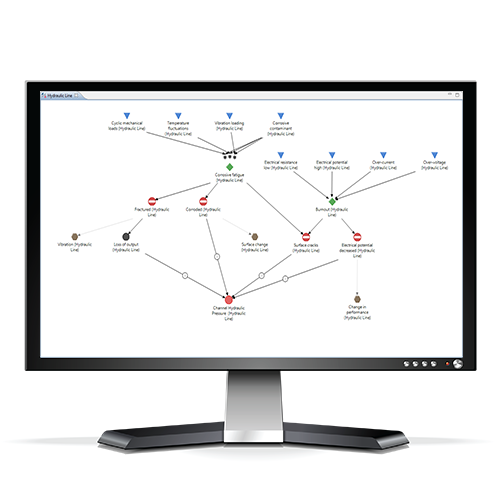
Show the causes, mechanisms and faults behind functional failure.
Improve understanding of failure causality.
MADE Failure Diagrams show failure causes, mechanisms and faults that lead to functional failure modes, supporting deeper engineering understanding and clearer analysis communication.
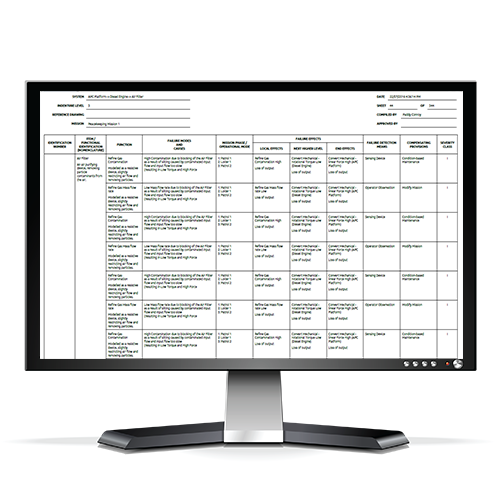
Generate FMEA reports directly from the system model.
Consistent, repeatable and aligned to selected standards.
MADE FMEA reports are generated from the system model in accordance with selected standard formats, helping teams reduce inconsistency and improve reporting confidence across design iterations.
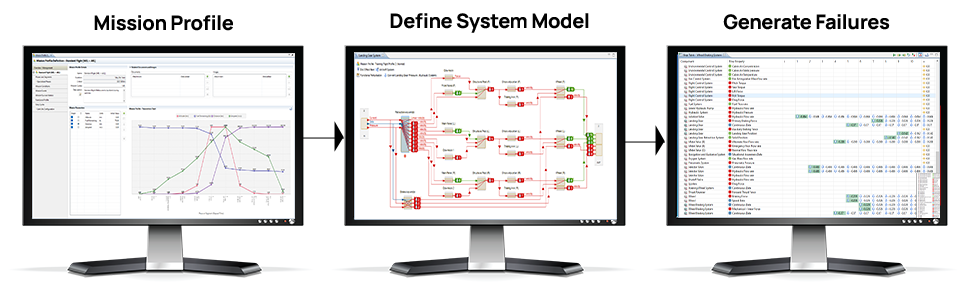
How MADE FMEA works
MADE uses mission context, system modelling and failure simulation to generate FMEA outputs that remain connected to the design.
Define Mission Profile
Define the usage profiles and environment of operation so the FMEA reflects operational context.
Define System Model
Define the system framework using Functional Block Diagram modelling.
Generate Failures
Generate functional failures from the system model and failure propagation table for review.
Inject Failure
Inject failure modes into the system model for use in simulation.
Simulate Failure
Simulate failure effects step-by-step, including local, next and end effects.
Chart Failure Responses
Graph response results at the local, next and end effect of a failure.
Impact for engineering and RAMS teams
MADE FMEA helps teams move from manual reporting to repeatable, model-based analysis that can evolve with the system.
Reduce manual rework
Regenerate FMEA outputs as the design changes instead of rebuilding analysis by hand.
Improve consistency
Use standardised taxonomies and model-derived outputs to reduce subjective variation.
Identify latent risk earlier
Use failure propagation and simulation to expose design risks earlier in the lifecycle.
Connect downstream analysis
Use FMEA outputs as a foundation for FTA, RCM, PHM and sensor strategy development.
Improve collaboration
Use visual tools and propagation tables to improve cross-disciplinary understanding.
Support lifecycle traceability
Keep failure data linked to the system model as the product evolves.
Move from static FMEA documents to model-based risk intelligence.
MADE helps teams generate, update and reuse FMEA outputs directly from the system model, improving traceability, consistency and confidence across the engineering lifecycle.