
Knowledge Centre · Connected risk
What is a Digital Risk Twin?
A living model of system risk that connects functions, dependencies, components and operating context—so teams can understand failure propagation and make better decisions across the lifecycle.
Definition
Risk is connected. Its model should be too.
In complex systems, risk does not live in isolated spreadsheets or reports. It moves through functions, interfaces, dependencies, components, missions and maintenance decisions.
A Digital Risk Twin is a digital representation of an intended or actual physical product containing the functional, physical and contextual information required to simulate system risk and trace how it propagates during operation.
A connected engineering model
From static RAMS documents to a living risk model.
A Digital Risk Twin links system behaviour with failure logic and lifecycle context. When the design changes, the connected analyses can be updated from the same governed source instead of manually reconciling separate documents.
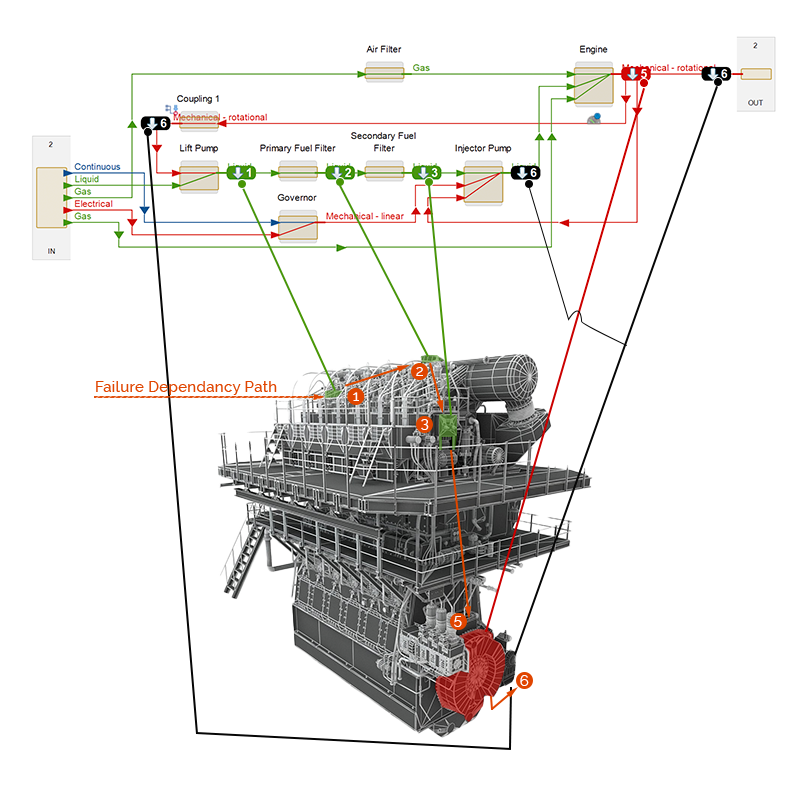
Risk connected to behaviour
Functions, flows, dependencies and components are analysed together.
Context connected to risk
Mission profile, operating environment, logistics and cost influence engineering decisions.
Core capabilities
What a Digital Risk Twin enables.
Autonomous risk analysis
Establish dependencies, simulate failure impacts and identify mitigation opportunities.
Integrated data management
Maintain traceability between system information, risks, analyses and decisions.
Visualisation and simulation
Show failure pathways and explore how risk changes across configurations and contexts.
Automated processes
Reduce repetitive data exchange and regenerate analysis as the model evolves.
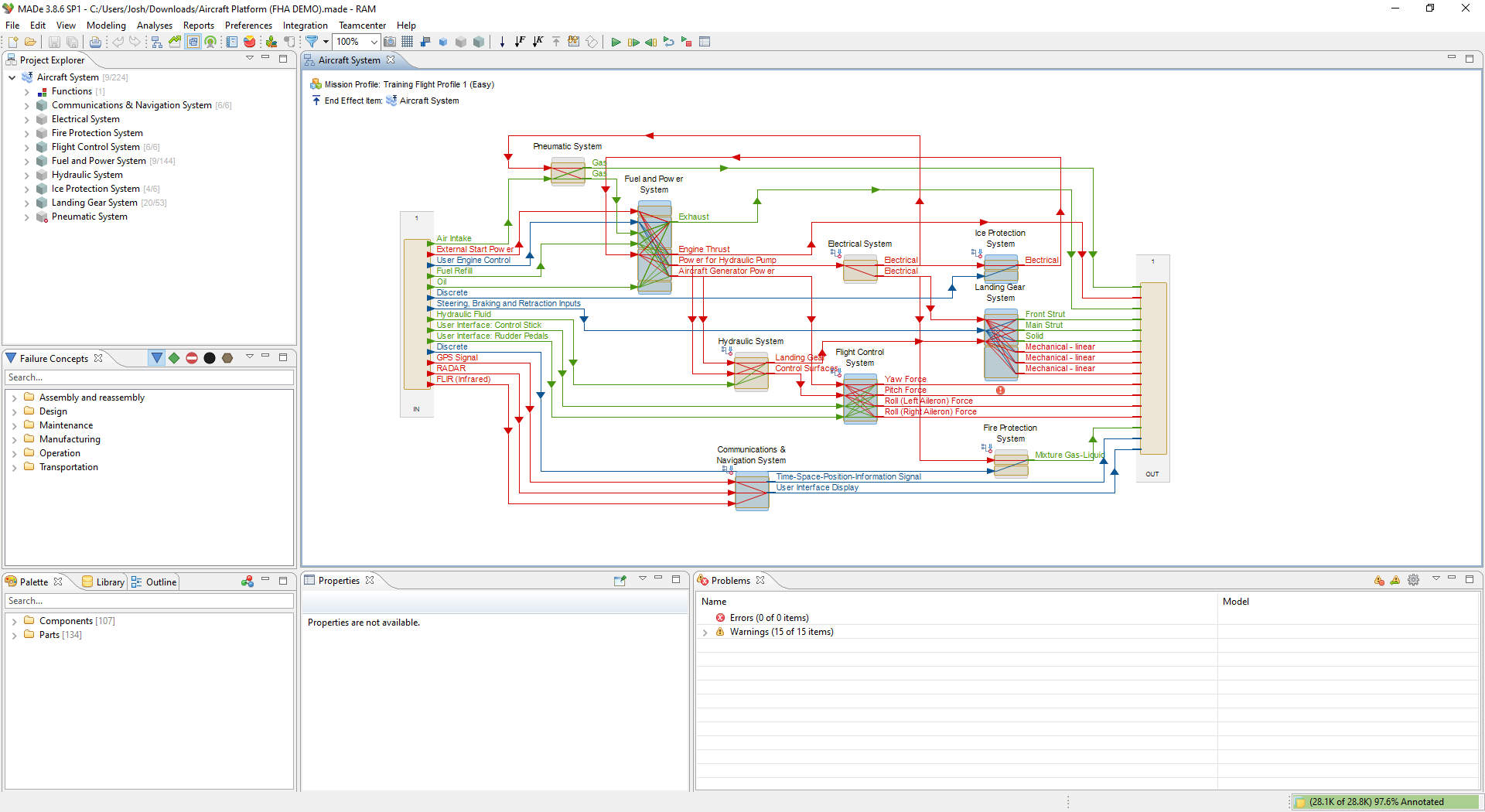
One foundation, many analyses
Analyses produced from a Digital Risk Twin.
The same model can support multiple RAMS perspectives while preserving their shared source information.
Fault Tree Analysis
Trace combinations of faults leading to a top event.
FMEA / FMECA
Evaluate failure modes, effects and criticality in system context.
Reliability modelling
Assess reliability, availability and allocation across architectures.
RCM
Connect functions and failures to maintenance strategy.
Maintenance cost
Estimate lifecycle cost and compare sustainment decisions.
PHM design
Develop sensor and diagnostic strategies from failure knowledge.
Engineering value
Why teams adopt a Digital Risk Twin.
- Identify risk earlierEvaluate failure behaviour while design choices can still be changed economically.
- Improve analysis qualityUse connected, current system data and stronger visual evidence.
- Increase traceabilityLink assumptions, risks, analyses and decisions to the evolving model.
- Reuse knowledgeCarry validated models and failure knowledge into future programs and configurations.
- Connect design and operationsUse operational evidence to improve future design and sustainment decisions.
Connected engineering intelligence
Shift RAMS left with a living model of system risk.
See how MADE creates a Digital Risk Twin for safety, reliability, maintainability and lifecycle decision support.