
Streamline certification with model-based safety analysis.
MADE helps aerospace teams apply a Model-Based Safety Analysis approach to support ARP4761 and ARP4754A workflows, connecting safety, reliability, diagnostics and certification artefacts through a Digital Risk Twin.
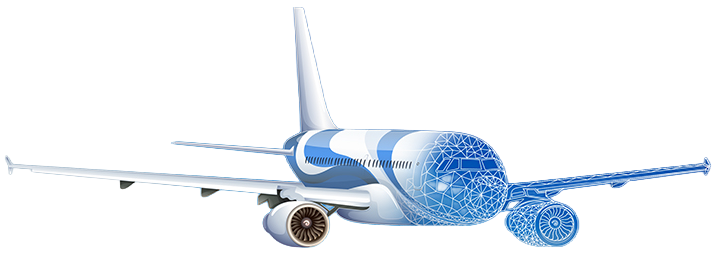
Aircraft certification is too complex for disconnected safety artefacts.
Certification requires consistent, traceable and repeatable safety assessment across complex systems. MADE provides a seamless environment to model, analyse and manage system safety, helping teams improve understanding of functional and system complexity throughout development.
The next-generation certification workflow.
MADE combines simulation-based outcomes, integrated MBSA workflows, knowledge digitisation, standardised taxonomy and Digital Risk Twins to help engineering teams make faster, more confident certification decisions.
Built for the future of aerospace systems.
MADE supports certification workflows across commercial aircraft, military platforms, eVTOL, VTOL and UAV systems — where complexity, safety and traceability must be managed from concept through design change.
A model-based approach to certification
MADE supports a top-down and bottom-up systems engineering approach to help streamline ARP certification processes for aerospace and OEM manufacturers.
Digital Risk Twin
Create a connected model that captures functions, failures, dependencies, risk logic and analysis artefacts in one engineering environment.
Standard taxonomy
Reduce miscommunication by enforcing a common engineering language for functions, failures, risk and analysis outputs.
Assist population of FHA
Support function and failure-condition capture so Functional Hazard Assessment artefacts remain connected to the system model.
Model-based safety verification
Link safety requirements, design decisions and analyses to improve traceability and certification confidence.
Simulation-based analyses
Simulate combined failure behaviour and understand how system behaviour changes across failure scenarios.
Automated artefact generation
Generate FMEA/FMECA, FTA, RBD, RCM and other certification artefacts from the connected system model.
The MADE workflow guides certification artefact development.
MADE helps guide the development of certification artefacts across FHA, PSSA and SSA activities, keeping analysis aligned from initial design through design revisions.
Functional Hazard Assessment
Assign mission profiles, environments and special conditions. Develop functions and identify failure conditions or hazards.
Preliminary System Safety Assessment
Allocate reliability to hardware, develop logical models and connect functions and failure conditions to architecture.
System Safety Assessment
Document, verify and conduct analyses to address failure conditions using inspection, test, demonstration or analysis evidence.
Use a Digital Risk Twin to streamline the Safety Assessment process.
MADE applies MBSA to support PASA/PSSA activities within an integrated analysis toolset. The Digital Risk Twin connects FHA, FTA, FMEA, Common Mode Analysis and reliability outputs to support traceable certification evidence.
- Improve understanding of system behaviour.
- Simulate combined failure behaviour.
- Manage design decision changes more easily.
- Repeat analyses with one-touch consistency.
- Synthesize high-complexity systems.
Risk Twin
Start certification with functions, failure conditions and hazards connected.
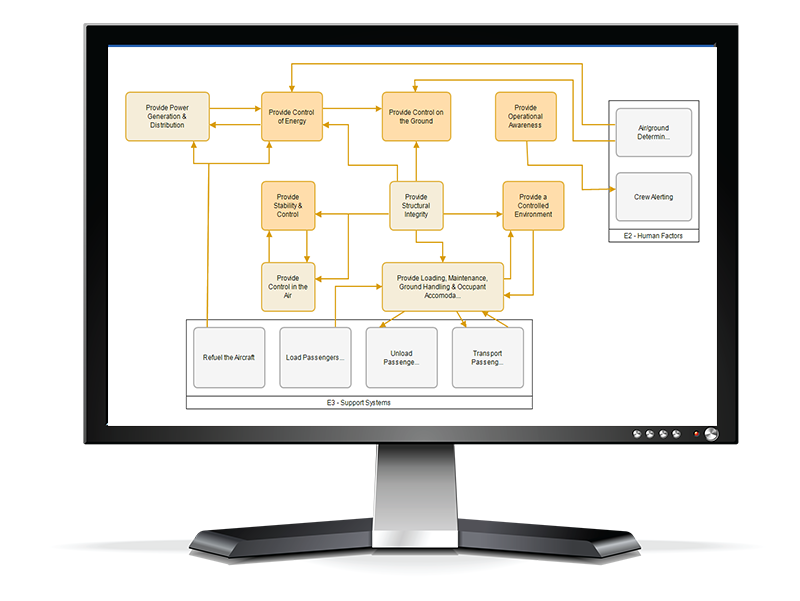
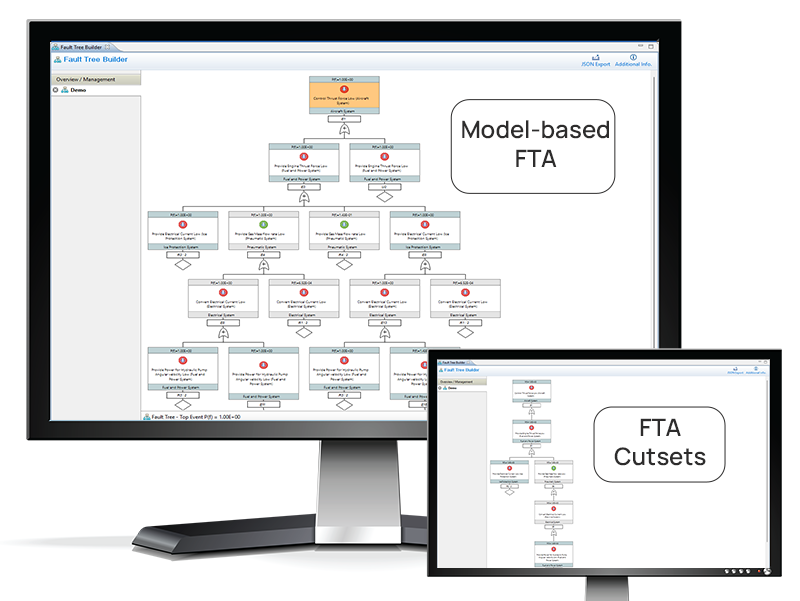
Generate and manage certification evidence across MADE modules.
MADE connects Platform, SRA, RAM and PHM outputs so certification artefacts, data and analysis remain traceable across the system model.
Platform
- MPD flight phases and segments
- Environment and emergency configuration
- Systems model / failure dependency model
- Model quality annotations
SRA
- Functional Hazard Analysis
- Fault Tree Analysis
- FMECA / FMEA
- Common Mode Analysis
RAM
- Reliability allocation
- Reliability Block Diagram
- Markov Analysis
- Reliability Centered Maintenance
PHM
- Diagnostics table
- Sensor set design
- Ambiguity groups
- Sensor trade studies
Why MADE improves certification workflow
MADE helps teams reduce manual analysis effort, improve consistency and manage the impact of design change.
Objective and traceable analyses
Connect certification outputs to the underlying Digital Risk Twin so evidence can be traced back to design structure, functions and failure logic.
Digitised domain knowledge
Capture safety, reliability and diagnostic knowledge in a reusable model rather than relying on disconnected documents and spreadsheets.
Reduced rework during design change
Manage updates more easily by linking design decisions, failure behaviour and downstream analysis in one connected workflow.
Cost-ineffective analyses made practical
Apply model-based automation to analyses that are difficult, expensive or inconsistent when attempted manually.
Outcomes for aerospace certification teams
MADE helps certification teams move from fragmented artefacts to connected safety intelligence.
Streamline artefact creation
Generate and maintain FHA, FTA, FMEA/FMECA, RBD, RCM and related outputs.
Improve traceability
Connect functions, hazards, failure modes, logic and certification evidence.
Support design change
Update analyses more consistently as the system architecture evolves.
Increase repeatability
Reduce manual rework with model-based, repeatable analysis generation.
Improve system understanding
Simulate combined failure behaviour across complex systems.
Strengthen confidence
Make certification decisions using connected, objective engineering evidence.
Download the Streamlined Aerospace Certification brochure.
See how MADE supports MBSA, Digital Risk Twins, safety assessment artefacts and ARP4761 / ARP4754A certification workflows.
Download Certification Brochure →Start streamlining your aircraft certification workflow.
MADE helps aerospace teams connect safety assessment, Digital Risk Twins, MBSA, certification artefacts and design change into one model-based engineering framework.