Syndrome Diagnostics
Failure Detection and Isolation
Causation-Based Intelligence for Mission-Critical Systems
Syndrome Diagnostics (SD) revolutionizes Failure Detection and Isolation (FDI) for complex engineering systems. Built on the foundation of PHM Technology’s MADE Digital Risk Twin, SD delivers a new paradigm in diagnostics: Causation-based AI (Cb-AI) that not only detects failures but understands their origins and the engineering context of the failure.

Syndrome Diagnostics High-level Features
Predict. Causation-based AI. Diagnostics






Syndrome Diagnostics
How Syndrome Diagnostics Works
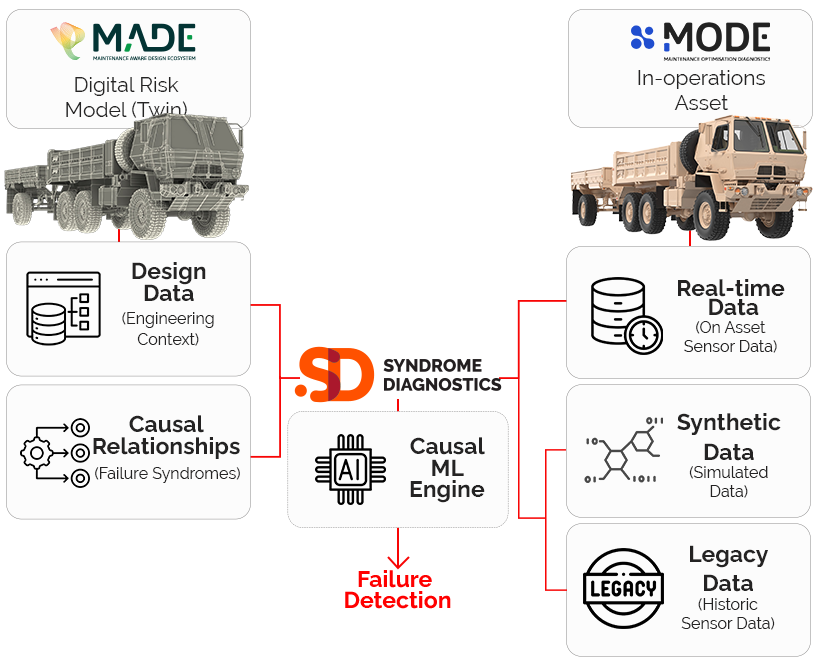
See how SD connects the dots between symptoms and root causes fast, accurate, and automated. SD integrates with MADE using the failure syndromes to identify every possible failure of a system. These Causal Relationships form the basis for the Cb-AI feature that is unique to SD.
Syndrome Diagnostics
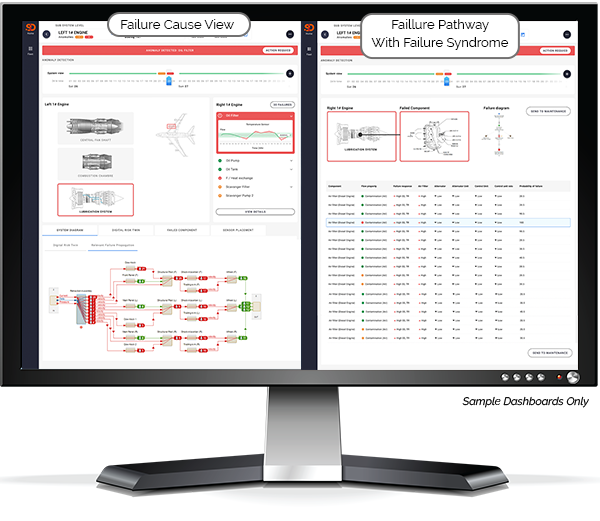
Failure & Engineering Context in One Screen
There are many advantages that position SD and its approach using Cb-AI as the market leader. One of the most transformative is its ability to deliver Context-Rich Diagnostics that close the gap between symptoms and root cause.
Beyond Detection
Beyond Detection
How SD Redefines Failure Detection and Isolation and System Health Management
Causation-based AI
Using MADE’s DRT allows leveraging of causal relationships to gain a holistic view of the system to determine root causes of failure.
Engineering Content Integration
Delivers actionable insights with design-aware diagnostics.
Minimal Data Requirement
Achieve high prediction accuracy with limited historical data or sensor input.
Early Incipient Failure Detection
Prevent costly downtime with proactive maintenance.
Traceable Failure Paths
Full visibility into the fault propagation from source to effect.
Offline Inference Capability
Validate predictions locally before deployment.
Model-Based Thresholding
Combines domain knowledge with AI for accurate alerts.
Digital Twin Integration
Seamlessly links diagnostics with system RAMS design models.
Adaptability to System Changes
Maintain diagnostic performance without expensive retraining.
Smarter FDI. Deeper Confidence
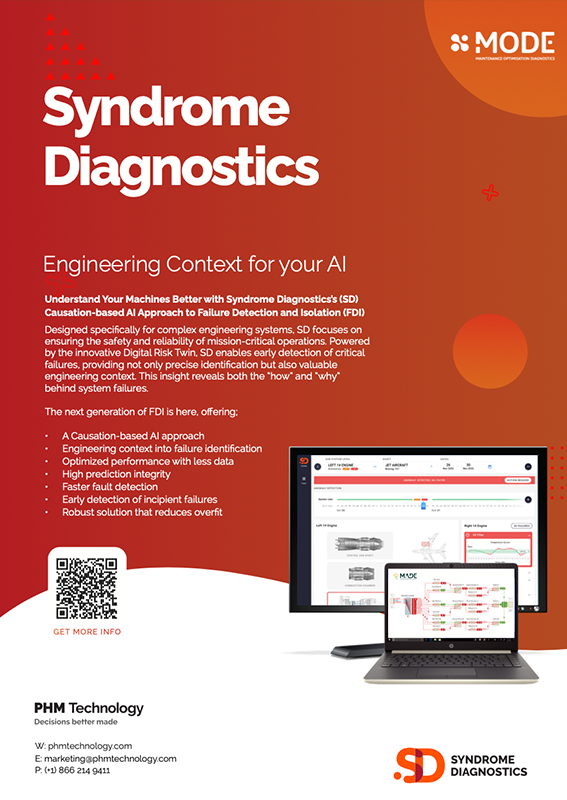
Explore What’s Possible – Download the SD Brochure
Click the image to learn how Syndrome Diagnostics empowers engineering teams to make faster, more informed diagnostic decisions with model-backed logic.
Syndrome Diagnostics
Why Traditional FDI Tools Fall Short
Conventional FDI methods are limited, they often require extensive historical data, are prone to spurious correlation and overfitting, and fail to utilize engineering context. These limitations can delay detection, inflate costs, and compromise safety.
Syndrome Diagnostics changes this with:
Causation-Based AI
Leverage causal relationships to go beyond symptoms to root causes. Unlike traditional black-box models, SD’s Cb-AI maps the causal pathways linking faults, conditions, and observable effects, offering explainable diagnostics.
Engineering Context Integration
SD embeds operational logic and system behavior to provide reasoning paths, clarifying root mechanisms behind anomalies. This gives unparralled insight into how and why failures happen, not just that they did.
Minimal Data Requirements
SD can deliver accurate results even with sparse or incomplete datasets by leveraging structured failure syndromes and design-intent models. This means you can utilize limited sensor data more effectively, thanks to embedded domain knowledge.
Fast with High Integrity Predictions
Cb-AI enables high integrity predictive diagnostics using condition evolution, shortening response times and boosting mission readiness. This means you can identify faults early, even before symptoms escalate, minimizing downtime and risk.
Syndrome Diagnostics
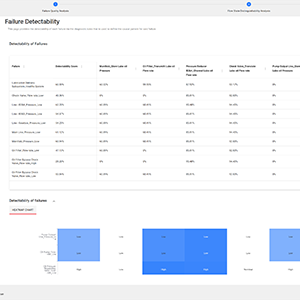
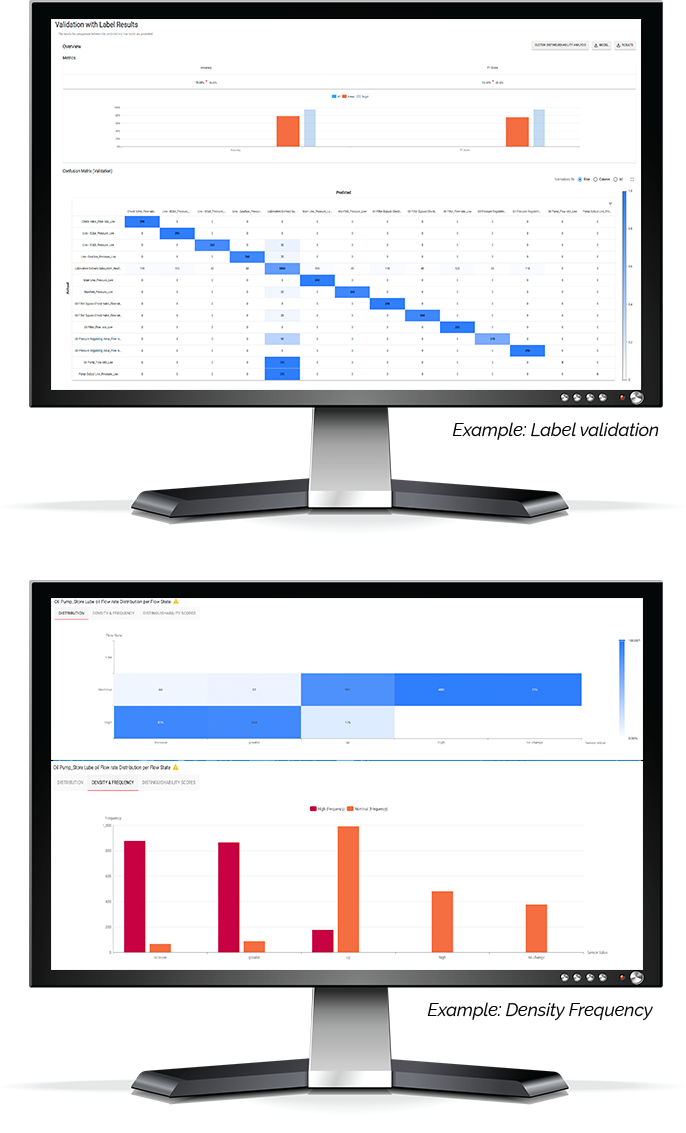
Exploratory Diagnostic Analysis Tool (EDA)
Evaluate, Clean, and Optimize Input Data to Power Syndrome Diagnostics
The Exploratory Diagnostic Analysis tool is purpose-built to help engineers assess and prepare the data that drives Syndrome Diagnostics. Before any algorithm is trained or deployed, the EDA tool allows you to interrogate the quality, consistency, and patterns within your failure data, identifying gaps, anomalies, and key correlations. With intuitive visualizations and smart filters, users can quickly determine if the intended input data is suitable for training, refine it where needed, and ensure that the diagnostic model built with SD is accurate, robust, and meaningful. It’s the critical first step in creating high confidence diagnostic intelligence.
| Feature | Syndrome Diagnostics (Causation-Based) | Traditional FDI (Correlation-Only) |
|---|---|---|
| Failure Detection Method | Identifies root cause via causal paths from component behavior | Detects anomalies based on statistical correlations |
| Engineering Context Integration | Deep integration with system models and design context | Lacks engineering model awareness |
| Data Requirement | Performs reliably with minimal and incomplete data | Requires large historical datasets to train effectively |
| Failure Explanation | Explains how and why a fault occurs | Flags anomalies without detailed causal explanation |
| Early Fault Detection | Detects incipient and cascading failures early | Delayed detection due to reliance on correlated symptoms |
| Adaptability to System Changes | Robust to design updates via Digital Risk Twin integration | Requires retraining for new configurations |
| Maintenance Insights | Suggests targeted tasks and optimized strategies | Offers limited guidance beyond fault alert |
| Overfitting Risk | Low: grounded in deterministic failure logic | High: prone to overfitting if data is unbalanced or sparse |
| Spurious correlation | Knowledge of causal links avoids the need to correlate relationships | Relationships are established via correlation, leading to spurious results |
| Traceability | Full traceability from symptoms to root cause in system hierarchy | Poor traceability – black-box model outputs |
| Regulatory Alignment | Supports safety-critical standards with transparent logic paths | Often unsuitable for high-integrity environments |
Key Features of Syndrome Diagnostics
Key Features of Syndrome Diagnostics
Unlock the Full Power of Model-Based Diagnostic Intelligence
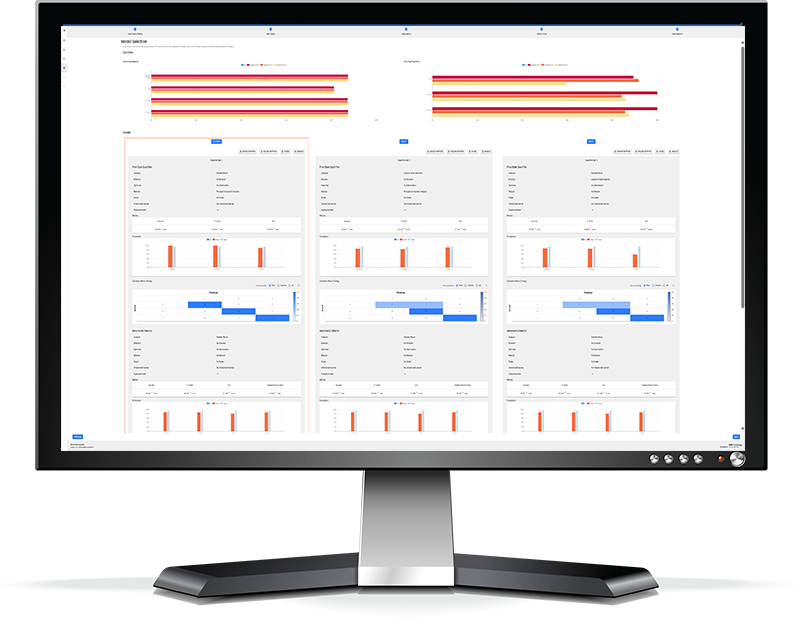
ML Model Selection
Automated Data Cleansing
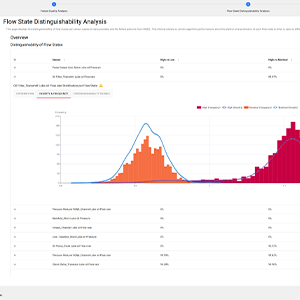
Data Analytics
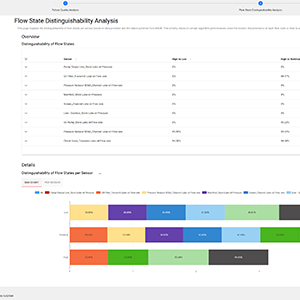
Distinguishability Analysis
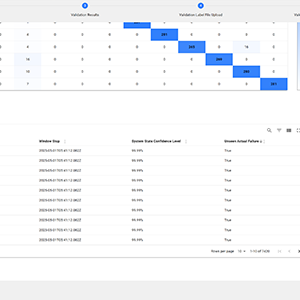
Detect Unseen Failures